
 ... please wait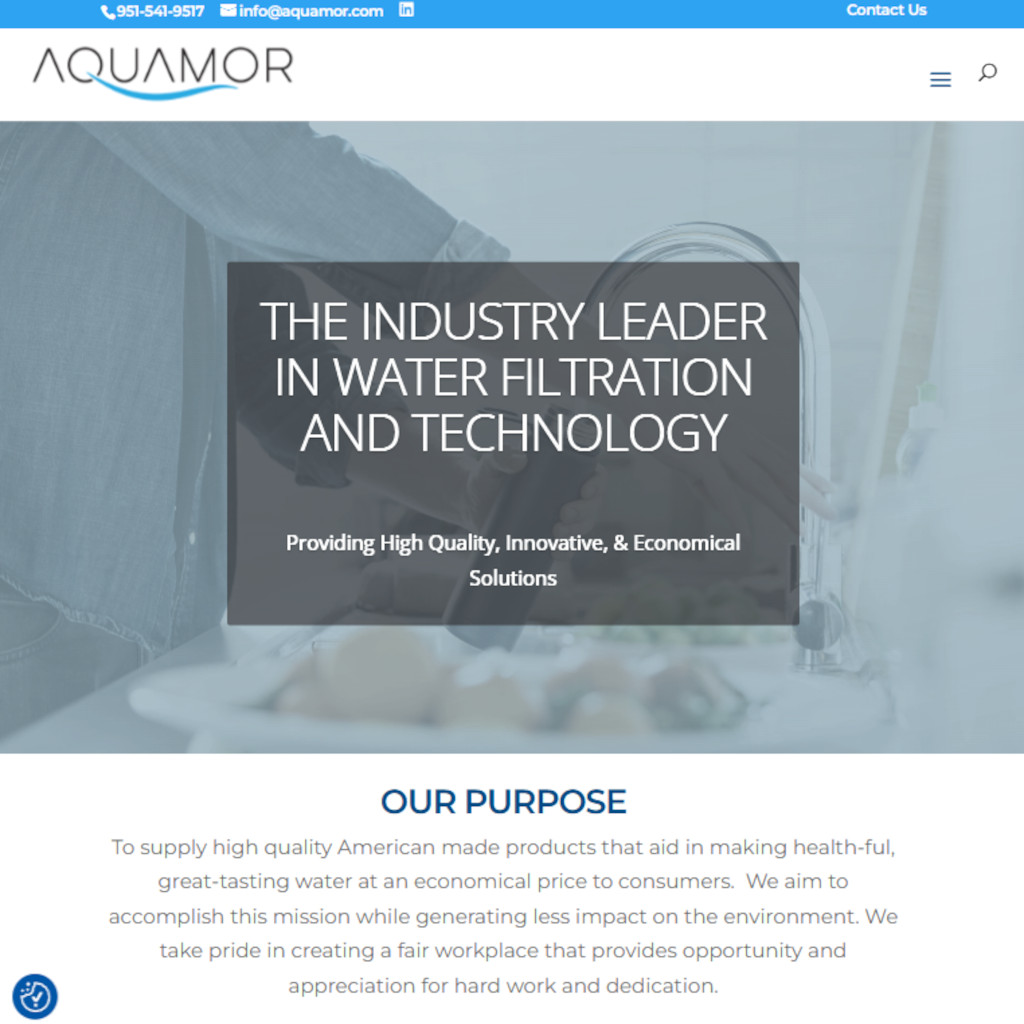

My work was shelved for "reasons" until this year when I was told to go ahead and pull the trigger. The website is already drawing a much higher user volume and the company is receiving many questions, comments, requests and invitations to events.
After several years, Aquamor finally launched a modernized website. When I first joined the company in 2018, the business was still operating under the name TSTWater, and the website reflected a very different era of the company’s growth. The original site was built almost entirely with static HTML pages. While that approach made the site extremely fast and fairly secure, it also created major limitations whenever updates needed to be made.
As the company evolved, expanded product lines, and eventually merged into the Aquamor brand, the old workflow became increasingly difficult to maintain. Even relatively simple edits often required manually updating multiple pages by hand. That might work for a very small site, but it quickly becomes inefficient once a company begins scaling operations, products, and marketing efforts.
I was eventually handed a mostly completed codebase in 2024 and asked to help bring the project across the finish line. My responsibilities included finishing unfinished sections, resolving inconsistencies, improving usability, implementing new functionality, and helping modernize portions of the front-end experience while preserving compatibility with the existing infrastructure.
The project itself represented an interesting middle ground between legacy development practices and modern CMS-driven web development. Unlike many projects that begin with a fully planned architecture, this site had already passed through multiple stages of development before it reached me. Part of the challenge was identifying which systems and patterns were already in place, determining what could be improved safely, and avoiding unnecessary rewrites that would delay deployment.
The final website relies heavily on technologies I have used professionally for years, including PHP, JavaScript, jQuery, MySQL, and WordPress. While WordPress often gets associated with simple brochure websites, in the real world it can become a highly customized application layer depending on the needs of the client. In this case, flexibility and ease of content management were critical. The company needed non-technical employees to be able to update pages, products, and information without editing raw HTML files directly.
One of the primary goals was improving maintainability without sacrificing performance. Static HTML sites are fast, but they are also rigid. Modern CMS systems introduce overhead, but they also provide scalability, reusable templates, dynamic content management, SEO tooling, and significantly easier long-term maintenance. For a growing company, those tradeoffs are usually worth it.
Another important aspect of the work involved consistency. Websites that evolve over many years often accumulate mismatched styling, duplicated logic, inconsistent layouts, and fragmented user experiences. Part of my role was cleaning up and standardizing these systems so the site felt cohesive rather than stitched together from several generations of development decisions.
The project also reflects something common in professional software development that many people outside the industry never really see: most business software and infrastructure work is iterative. Rarely does a developer start with a blank page and complete creative freedom. More often, you inherit existing systems, business constraints, legacy code, deadlines, incomplete documentation, and changing requirements. A large part of the job becomes understanding how to improve a system pragmatically without disrupting the business relying on it.
That same philosophy has carried over into much of my work at Aquamor over the years. My role has frequently involved bridging gaps between older systems and newer technologies—whether that meant ERP integrations, EDI validation tools, warehouse logistics utilities, custom APIs, reporting systems, or internal workflow applications. The website project was simply another example of solving real-world operational problems with practical engineering solutions.
The completed site now gives the company a much more maintainable platform moving forward while also providing a cleaner and more modern presentation for customers, distributors, and partners. More importantly, it allows the business to continue evolving without every update requiring manual intervention from a developer.
I am not sure who initially built this new version of the website. I was handed a mostly completed list of files in 2024 and was asked to finish it up and add a few features.
I cleaned up some of the CSS and built a few features and replaced a few others as well as adding few security and cache features.
- I added my typical loading animation; in this case using water as the animation.
- The way they were loading the products was slow, ugly and not searchable. I added an ajax method to pull the data based on a custom post type that was paginated on the page and was searchable on the page. It was also possible to switch between cell and table view which is especially desirable on mobile devices. Each product is still a blog post so it's also searchable using the default Wordpress search method. I also built a template to make that a bit more user friendly.
- Added cache and security features both front and back-end.
- Added a blog.
